Showing posts with label Android M. Show all posts

Friday, 30 October 2015

Google I/O 2015: Part V – Advanced Technologies and Projects

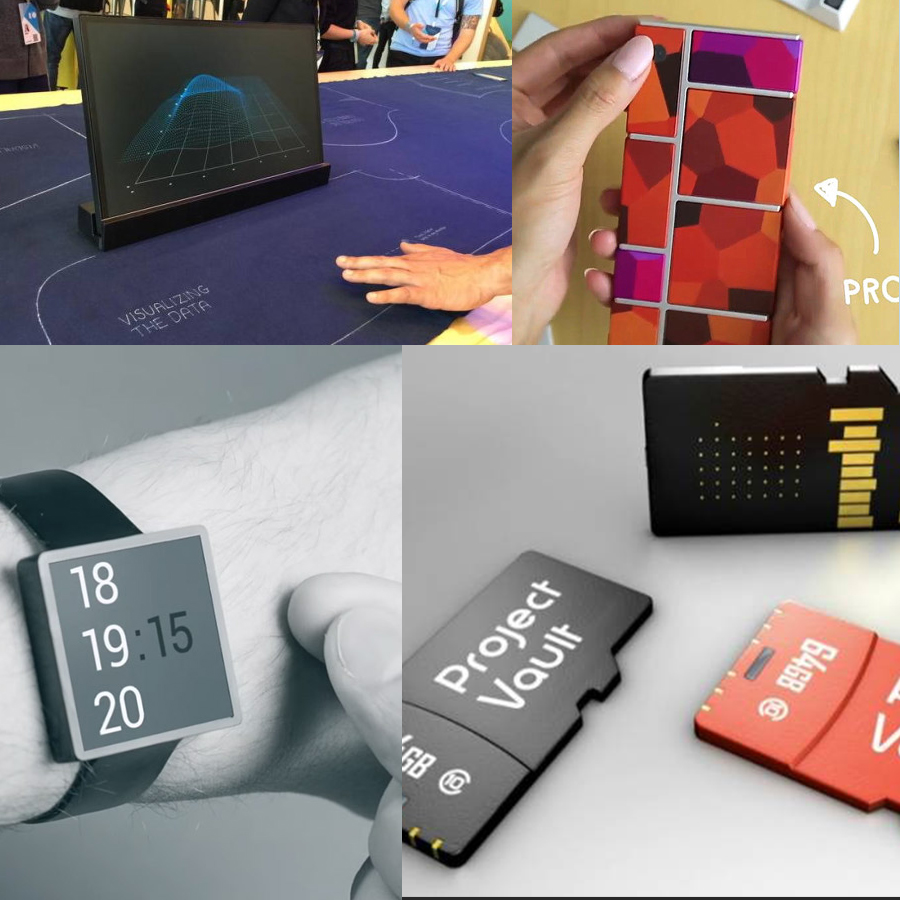
Project Vault
Project Vault aims to secure the sensitive data that is stored on the microSD cards used as external storage media in smartphones. Designed by ATAP, Project Vault incorporates an ARM chip installed inside a microSD card with at least 1 GB of storage space. These cards will be based on RTOS (Real-time Operating Systems). The hardware setup will also consist of an NFC and an antenna for security purposes. The card will feature 2-factor authentication and will act like a regular microSD card to the parent device and would work on a number of operating systems like Android, Windows, OS X, Linux, etc.

Project Soli
Thinking of having a radar right inside wearable like smartwatches, Google ATAP (Advanced Technologies and Projects) team has made it possible. Project Soli wants to create a way for people to operate their devices using only natural hand motions, rather than styluses, touch screens or scroll balls. This highly sensitive radar sensor will be capable of sensing even slightest of the movements and hence will correctly estimate the velocity and the distance. The radar sensors are so precise that the most minuet movement is also recognized. ATAP is using radar to make Soli work even at a distance. It may be available later this year, and will be a feature of Android Wear.

Project Jacquard
Probably the new project debuted by ATAP was Project Jacquard. Project Jacquard incorporates electronics woven right into the fabrics. So, user doesn’t have to rely on wearable devices for doing basic tasks on smartphones. The team has created interactive, touch sensitive threads that can be woven into fabric so user can control their devices from: the sleeve of shirt or pant. They announced a partnership with Levis and are hoping to spread the technology through the fashion industry. The big difference between Jacquard and “smart clothing” of the past is that Google worked with clothing manufacturers to develop a yarn that struck a balance between being conducive for tech, while still being durable and wearable enough for use in the fashion industry.
User can think about controlling music playback just by making a gesture on your garment. The scope of this technologies involving fabric-woven electronics is virtually endless and depends on the imagination of the company and the developers.

Project Ara
Project Ara, one of the most interesting development in Google i/o 2015. The ATAP team demonstrated a working prototype of Google’s modular smartphone. An Ara phone was assembled from scratch, adding everything except the battery module. The phone was then turned on and shown to be working fine. The battery module was then added, without rebooting the device, and no issues come across in accepting the newly added module. The finished product will allow user to swap modules, such as cameras and batteries, in and out of the phone like building blocks.

More About Google i/o 2015
Source Link: http://www.9spl.com/blog/google-io-2015-part-v-advanced-technologies-projects/

Thursday, 1 October 2015

Google I/O 2015: Part I – Android M

Google I/O collectively brings the world’s best Android developers and displays best of what comes next for Android. It gives first, glimpse of what will be making its way onto our smartphones in the coming months. It has announced that a new version of Android M with an integrated mobile payments, focuses on battery performance and contextual Google Now searches, at its annual I/O developers conference. It also unveiled a new Google Photos product, virtual reality, Project Brillo (an operating system for internet of things) and many more. Google announced a bunch of updates designed to make its products work better in parts of the world with poor connectivity. Lets start one by one.
Google revealed its next major version of Android. Google debuted the first version of Android M. Android M is far enhanced version of its predecessor Lollipop. It is like a reorganization of Android, new services, with power optimization, and changes to how apps interact. It is a developer-friendly and an arguably unspectacular release. Here are major updates on this.

App Permission Mechanism Revamp
Google has simplified permissions, making it clear to users when they use a feature for the first time. When an app needs to use location data, camera or other capabilities of device, earlier apps was asking upon installation for permission to each of the features. Now users will be able to see which apps uses which capabilities of device more easily, and decide if they want to allow that permission in a more granular way. User can also look up everything that an app is accessing, or which ones are using, calendar or camera.
Web Experience: Chrome Custom Tab
Currently when user click on a web link from an app, either user have to load the browser or use of a stripped-down web view in the app. Google announced Chrome Custom Tab, looks like an in-app Chrome browser that loads pages faster by preloading certain elements, including autofill and passwords. Google also announced some steps for easy running apps to link to other apps.
A search results in faster loading page with a spotty connection and updated information. Google lets people save YouTube videos offline in some countries but now, Chrome will also be able to save pages for offline use. In an onstage demo, it can autocomplete searches, show reviews and information, and give turn-by-turn directions offline.
App Links
Currently, Android supports an application linking system with ‘App Chooser’ dialog box for user to select how the link is handled. It gives choice to user to open a particular web link in a web browser or an app. Android M let developers add in an auto-verify feature within their code which will open the link within respective app (provided the app is installed on your phone). In the background, the Android M OS will verify the link with an app’s server and post-authentication will proceed to open the link within the app itself, without asking user where they want to open the link.
Android Pay
Android Pay— Google’s answer to Apple Pay and a second chance for the failure of Google Wallet service. Android Pay, a new way to make payments for goods and services from Android phone. It will let user to make purchases in apps or tap an NFC sensor to pay for physical goods. Android Pay is coming out of the box with bank partnerships and focuses on letting the user choose how they want to make everything work. It will work with phone running KitKat and newer version, and is probably being pre-installed by AT&T, Verizon, and T-Mobile. Google assures 700,000 stores will accept it that includes Chipotle and Dunkin Donuts. Device running Android M and newer will support fingerprint recognition for authorizing payments, both in the Play Store and online.
USB-C Port
In addition to improvements in power usage, Google is implementing new charging alternatives for future device that use USB-C. Type C allows device to negotiate either user can utilise the device to charge from, or device being charged, and this will be supported in Android. Google said that with USB-C port, devices will be charged 3 times faster which means user can charge other device from tablet or smartphone. In short a user can use their tablet’s battery to charge their smartphone.
Battery mode in Doze
Google introduced a new feature called Doze, an effort to save battery life. Android M uses motion detection to go into deeper sleep if inactive for a longer time. Google said it trades “app freshness” for battery life. Though dozing, device can still respond to high-priority messages and use alarms as well. In a test against a Nexus 9 running Lollipop, Google said Android M lasts up to two times longer in standby in Doze mode.
More About Google i/o 2015: