Showing posts with label Google I/O 2015. Show all posts

Friday, 30 October 2015

Google I/O 2015: Part V – Advanced Technologies and Projects

Project Vault
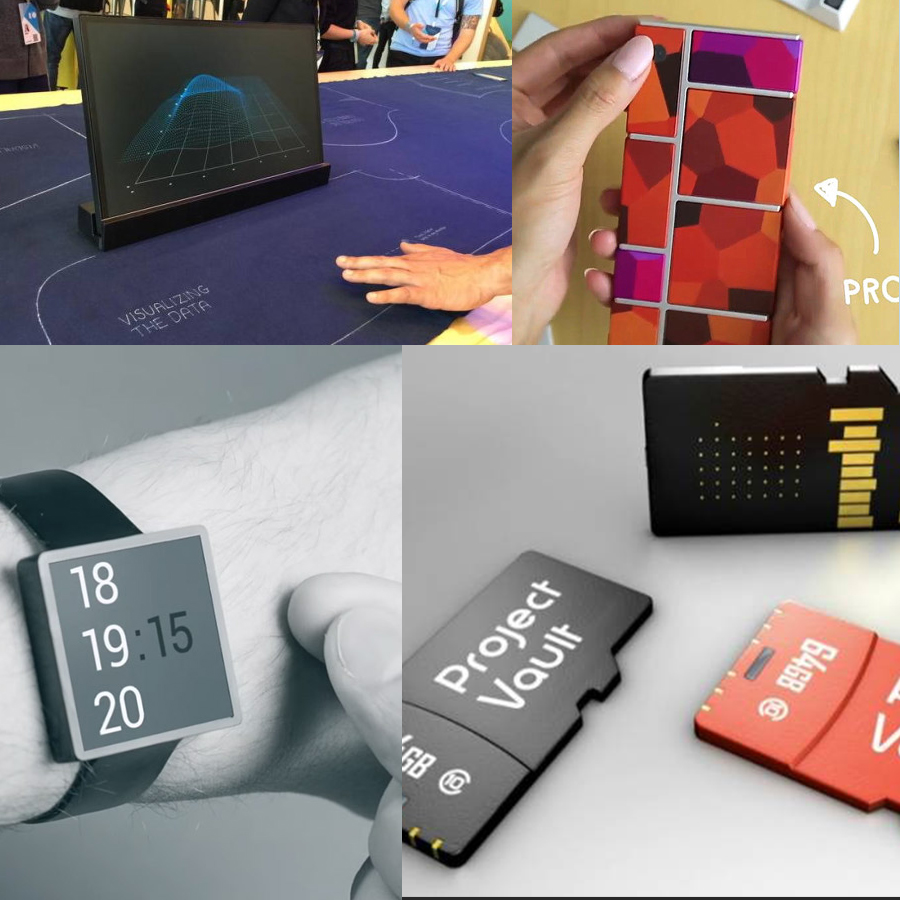
Project Vault aims to secure the sensitive data that is stored on the microSD cards used as external storage media in smartphones. Designed by ATAP, Project Vault incorporates an ARM chip installed inside a microSD card with at least 1 GB of storage space. These cards will be based on RTOS (Real-time Operating Systems). The hardware setup will also consist of an NFC and an antenna for security purposes. The card will feature 2-factor authentication and will act like a regular microSD card to the parent device and would work on a number of operating systems like Android, Windows, OS X, Linux, etc.

Project Soli
Thinking of having a radar right inside wearable like smartwatches, Google ATAP (Advanced Technologies and Projects) team has made it possible. Project Soli wants to create a way for people to operate their devices using only natural hand motions, rather than styluses, touch screens or scroll balls. This highly sensitive radar sensor will be capable of sensing even slightest of the movements and hence will correctly estimate the velocity and the distance. The radar sensors are so precise that the most minuet movement is also recognized. ATAP is using radar to make Soli work even at a distance. It may be available later this year, and will be a feature of Android Wear.

Project Jacquard
Probably the new project debuted by ATAP was Project Jacquard. Project Jacquard incorporates electronics woven right into the fabrics. So, user doesn’t have to rely on wearable devices for doing basic tasks on smartphones. The team has created interactive, touch sensitive threads that can be woven into fabric so user can control their devices from: the sleeve of shirt or pant. They announced a partnership with Levis and are hoping to spread the technology through the fashion industry. The big difference between Jacquard and “smart clothing” of the past is that Google worked with clothing manufacturers to develop a yarn that struck a balance between being conducive for tech, while still being durable and wearable enough for use in the fashion industry.
User can think about controlling music playback just by making a gesture on your garment. The scope of this technologies involving fabric-woven electronics is virtually endless and depends on the imagination of the company and the developers.

Project Ara
Project Ara, one of the most interesting development in Google i/o 2015. The ATAP team demonstrated a working prototype of Google’s modular smartphone. An Ara phone was assembled from scratch, adding everything except the battery module. The phone was then turned on and shown to be working fine. The battery module was then added, without rebooting the device, and no issues come across in accepting the newly added module. The finished product will allow user to swap modules, such as cameras and batteries, in and out of the phone like building blocks.

More About Google i/o 2015
Source Link: http://www.9spl.com/blog/google-io-2015-part-v-advanced-technologies-projects/

Tuesday, 20 October 2015

Google I/O 2015: Part IV – New Product Announcement


Formerly in Google I/O 2015 Part-I and Part-III– It explained about Android M, Enhancement in Existing Products and Developer Tools. Google came up with many New Products such as HBO NOW, Internet of Things- Project Brillo, Family Friendly Feature and Jump Camera.

HBO Now in Android
HBO Now- coming to Google. HBO Now made large waves when it came to iTunes App Store. An app will be available soon on the Play Store which will allow user to access all the same content on Android device that HBO Now gives on other platforms. HBO Now, the only service for watching everything from Game of Thrones to True Detective, is now getting to Android. There is no confirmed release date but marks the end of Apple’s exclusive access.
Internet of Things and Project Brillo
Google revealed an operating system for Internet of Things- Brillo. It is called “Brillo” because it is a “polished down” but a completely functional version of the Android operating system. Brillo is derived from Android- running on the same core of drivers and code, but simplified so that it can be used on everything from locks to kitchen devices. Lightweight enough to run on everything from user Nest to smart doorknob, It is designed to allow everything in user home to talk to everything else. If Brillo is the OS for the device, then Weave communication protocol will facilitate those device to talk to each other using common schemas. It will connect phones to device and those device to the cloud.
Brillo is designed to run on connected device that have small processors and low memory. The OS stores and manages data collected by sensors in the device. The most ambitious of all Google announcements, these platforms are brand new. Brillo will become available to developers in Q3 whereas the Weave protocol will be ready by Q4. The main aim is to standardize devices on IoT, across different platforms and let developers build apps on top.
Jump Camera
Google partnered with GoPro, an effort to make it easier for people to film the VR-compatible video to build a circular 16-camera rig. The geometry of the rig called Jump- will be made available this summer. Cardboard is the low-rent virtual reality, Jump is the big budget version. There are two part of Jump- the camera and the Assembler. Once user record in these camera, Google’s assembler will figure out depth data from different images and stitch them together into a stereoscopic VR video. GoPro announced it will be the first company to build a Jump-compatible rig—basically a 16-camera wheel that captures 360 degrees of imagery.
Google hopes Jump will become the standard for capturing, assembling, and viewing immersive virtual environments. Google said an assembler takes “thousands of computers” and will be available this summer to a “select few” people. There aim is to increase variety and type of images and videos available to view through VR systems.
New Family-Friendly Feature:
Google Play announced the launch of a family-friendly features which will help parents to find appropriate apps as well as content. This new area of the Play Store will highlight application and games specifically with a young audience in mind. Now kids and their parents can navigate by property or character. Rather than sifting through the store for content based on Star Wars or Dora the Explorer, a single tap of an icon will take user to a whole area of the store dedicated to kid-friendly content based on the property or character.
Under this, first new feature is Family tab,now included on the homepage of the Apps, Games, and Movies & TV section that allows parents to browse through content suitable for children with just a tap. Following the Family Star will easily find age-appropriate content. Just tapping the Family Star button, parents can view content that is organized by ages, so they can easily find a learning app for their toddler or a summer reading eBook for their teen. Parental Controls makes family-friendly content easier, but none of that matters if kids can still access the kinds of things that are off-limits for them. Updated parental controls will now allow parents to restrict downloads, purchases or streaming of future content.
More About Google i/o 2015:

Wednesday, 7 October 2015

Google I/O 2015: Part III – Developer Tools

Previously, in Google I/O 2015 Part-I- it was discuss about Android M with its upcoming Features while in Part-II briefs about enhancements in its existing products. Google also declare some special tools for Developers are detailed below.
Cloud Test Lab
It is one of the most interesting announcements. It facilitates developers to upload their app and run it on top 20 android devices. It’s automated mobile app testing. Cloud Test Lab will then send a report back to the developer with crash reports and other information. This will be available soon.
iOS & Cocoa Pods
Help to access user favorite libraries through Cocoa Pods, an official distribution channel for Google SDKs on iOS.
Android Studio
Preview Android Studio v1.3, now 1.3 was announced at this year’s I/O with improved Gradle build speed, a new memory pro-filer and debugging support for C and C++. Addition to this, an Android Studio NDK plugin provides features such as refactoring and code completion for C/C++ code along with Java code. Java and C/C++ code support is integrated in one development experience is changeless for Android app developers. Through the Canary channel update to Android Studio v1.3.
Android Design Support Library
The new Android Design support library will make Material Design apps even easier. They have packaged a set of key design components (e.g floating action button, snackbar, navigation view, motion enabled Toolbars) which are backward compatible to API 7 and can be added to user app to create a modern, great looking Android app without building from scratch.
Firebase
Makes it easy to create apps quickly, without spinning up servers or writing server-side code.
Google Play Store
Developers will now have a homepage on the Google Play Store that will allow companies with more than one app for all their products, driving loyalty between developers and users. Gives new and powerful tools which will help to grow user’s business, improve decision making based on smarter insights and engage and retain a valuable user base.
Google Play Services

Google released v7.5 of Google Play services that include new features ranging from Smart Lock for Passwords, new APIs for Google Cast, Google Cloud Messaging and also Google Maps API on Android Wear device.
Universal App Campaigns
This is a system that allows Google to control the ads on user app after user have set a cost limit, leaving user to concentrate on further development. It will be automated in a few months.
App Indexing
This will Index user app’s content into Google Search with a website. Available for Android, and now for iOS also.
AdMob
Monetize user apps intelligently on a single platform, so they can gain insights about their users, drive more in-app purchases and maximize ad revenue. There is also a new feature to support mobile app sales teams called Ad Mob Reservations. They have also integrated Google Analytic into Ad Mob.
Polymer 1.0
Google launched Polymer 1.0. The Web application toolkit is designed to help developers give high-quality app-like experiences to the browser, over both desktop and mobile. These allow developers to deliver common features like toolbar and menus, add services like maps and charts, or develop a complete mobile-first checkout flow in their Web apps.
The new and updated version includes brand-new, fast, and easy-to-use data binding system, element teeming and styling by utilizing custom CSS properties, fast and lightweight Shadow DOM shim for non- browsers and “Behaviors” mechanism for sharing behavior between elements. Google has re-written library from ground up for its developer to preview with a focus on cross-browser performance. The new library is about three times faster on Chrome and four times faster on Safari. Launch of 1.0 means Polymer is ready for developers to use the toolkit in production apps. It’s another way Google is trying to pull apps and Web closer together.
Android Nanodegree
Enroll in the industry’s first Android Nanodegree, developed in collaboration with Udacity. The syllabus is built from the ground to meet the high standard for Android development. Nanodegree covers everything from fundamentals to advanced development skills, as well as Google Play services and Material Design.
Udacity is launching 6-month course for $200 a month for an Android Nanodegree.
More About Google i/o 2015

Friday, 2 October 2015

Google I/O 2015: Part II – Enhancement in Existing Products

Earlier in Google i/o 2015- Part I, a brief about Android M with its many new upcoming features. Google also announced enhancement in existing Products which includes Google Now on Tap, Google Photo App, Offline Google Maps, Android Wear, Google Cardboard. Let’s see in details:


Google Now with Now on Tap
Google Now is getting smarter and it’s going to be incorporated throughout the phone by a program called Now on Tap. With Now on Tap, user can hold the home button that brings up Now cards with relevant information, either user is in an app, email or web browser. For example: If someone emails you about going to a movie, summoning, Now displays information about whatever was mentioned, with links to YouTube trailers, ratings, and other info. If user is messaging about laundry and dinner, it can prompt to set up a to-do item, and give restaurant listings, along with buttons for Help, Maps, and open table. It’s a big expansion for Now and Google emphasized improvements in contextual understanding.

Google Photo App
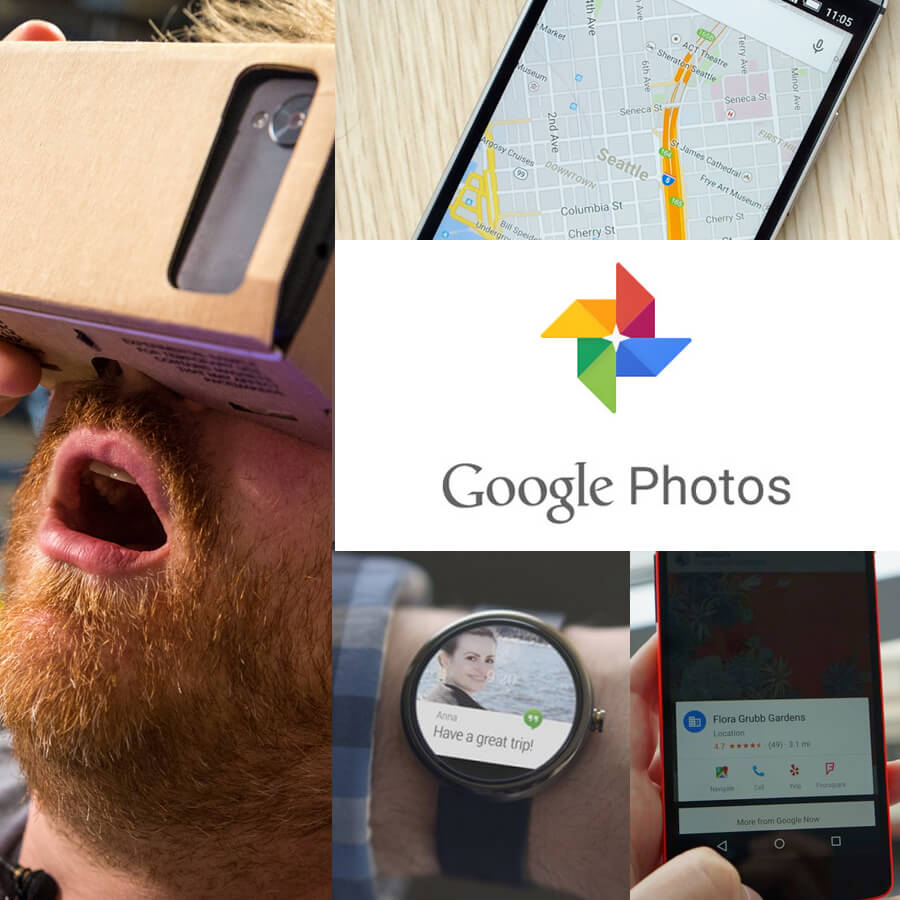
Google has a strange relationship with photos and videos. In spite of owning Picasa and introducing tons of awesome features in Google+ Photos, user hasn’t picked up due to being tucked away in Google+. It can automatically organize user’s photos by location, time, or even faces that appear in the images. Google Photos offers unlimited free storage up to 16 MP photos and 1080p video, with compressed file storage and a complete overview always available to access entire library at fingertips, all without saving anything in phone. User can automatically backup all the photos and all Auto Awesome features have been incorporated into the new service.

Offline Google Maps
Now it is possible to save map data in Google Maps for offline use. If user preload map data of a particular area, can search for locations in that region, get directions and start step-by-step navigation. The offline data also includes restaurant hours, reviews and many more. Now, “offline Maps” means actual Maps experience, totally without an internet connection.

Android Wear
Some new powerful apps have been added by Google to its Android Wear smartwatch OS which includes an easy option for calling Uber cars. Android Wear is still a very young platform, but several Android partners are already developing (or open to developing) their own wearable platform to make up for Google’s failure to improve Wear fast enough, this really needs to be on Google’s radar for 2015. There is also a new app launcher designed to make loading apps faster and easier and can be used without voice commands. While Android Wear announcement was not that much technically new but yet exciting, Android watches will now get gestures that will allow user to move between cards by just flicking wrist. By keeping power-saving mode always-on, will allow user to keep to-do list on wrist without running down the battery. If user is navigating with Google Maps, directions will stay on the screen, making them brief as they move. All watches of Android Wear now supports WiFi. There is the cluster of other small updates, including the ability to recognize drawings and turn them into emoji. Android Wear is still in its infant stage but is getting better at a rapid phase.

Google Cardboard
Now phones have become much bigger so Google launched a new version of Cardboard that can fit phones as large as six inches. Still there isn’t a ton of content available on Cardboard, Google is financing a program called Expeditions, designed to insert virtual reality into the classroom. From a single control panel, a teacher can lead class of cardboard wearing kids on a virtual expedition.
The new unit is ditching headset’s original magnet clicker for a cardboard button which will work with any phone. Google is now making it’s SDK available for iOS as well as Android, and a dedicated Cardboard app that is launched on Apple’s App Store. It’s also announced Expeditions in order to help kick-start VR use and virtual reality education tool that lets students take VR field trips while teachers control their experience with a tablet.

More About Google i/o 2015


Thursday, 1 October 2015

Google I/O 2015: Part I – Android M

Google I/O collectively brings the world’s best Android developers and displays best of what comes next for Android. It gives first, glimpse of what will be making its way onto our smartphones in the coming months. It has announced that a new version of Android M with an integrated mobile payments, focuses on battery performance and contextual Google Now searches, at its annual I/O developers conference. It also unveiled a new Google Photos product, virtual reality, Project Brillo (an operating system for internet of things) and many more. Google announced a bunch of updates designed to make its products work better in parts of the world with poor connectivity. Lets start one by one.
Google revealed its next major version of Android. Google debuted the first version of Android M. Android M is far enhanced version of its predecessor Lollipop. It is like a reorganization of Android, new services, with power optimization, and changes to how apps interact. It is a developer-friendly and an arguably unspectacular release. Here are major updates on this.

App Permission Mechanism Revamp
Google has simplified permissions, making it clear to users when they use a feature for the first time. When an app needs to use location data, camera or other capabilities of device, earlier apps was asking upon installation for permission to each of the features. Now users will be able to see which apps uses which capabilities of device more easily, and decide if they want to allow that permission in a more granular way. User can also look up everything that an app is accessing, or which ones are using, calendar or camera.
Web Experience: Chrome Custom Tab
Currently when user click on a web link from an app, either user have to load the browser or use of a stripped-down web view in the app. Google announced Chrome Custom Tab, looks like an in-app Chrome browser that loads pages faster by preloading certain elements, including autofill and passwords. Google also announced some steps for easy running apps to link to other apps.
A search results in faster loading page with a spotty connection and updated information. Google lets people save YouTube videos offline in some countries but now, Chrome will also be able to save pages for offline use. In an onstage demo, it can autocomplete searches, show reviews and information, and give turn-by-turn directions offline.
App Links
Currently, Android supports an application linking system with ‘App Chooser’ dialog box for user to select how the link is handled. It gives choice to user to open a particular web link in a web browser or an app. Android M let developers add in an auto-verify feature within their code which will open the link within respective app (provided the app is installed on your phone). In the background, the Android M OS will verify the link with an app’s server and post-authentication will proceed to open the link within the app itself, without asking user where they want to open the link.
Android Pay
Android Pay— Google’s answer to Apple Pay and a second chance for the failure of Google Wallet service. Android Pay, a new way to make payments for goods and services from Android phone. It will let user to make purchases in apps or tap an NFC sensor to pay for physical goods. Android Pay is coming out of the box with bank partnerships and focuses on letting the user choose how they want to make everything work. It will work with phone running KitKat and newer version, and is probably being pre-installed by AT&T, Verizon, and T-Mobile. Google assures 700,000 stores will accept it that includes Chipotle and Dunkin Donuts. Device running Android M and newer will support fingerprint recognition for authorizing payments, both in the Play Store and online.
USB-C Port
In addition to improvements in power usage, Google is implementing new charging alternatives for future device that use USB-C. Type C allows device to negotiate either user can utilise the device to charge from, or device being charged, and this will be supported in Android. Google said that with USB-C port, devices will be charged 3 times faster which means user can charge other device from tablet or smartphone. In short a user can use their tablet’s battery to charge their smartphone.
Battery mode in Doze
Google introduced a new feature called Doze, an effort to save battery life. Android M uses motion detection to go into deeper sleep if inactive for a longer time. Google said it trades “app freshness” for battery life. Though dozing, device can still respond to high-priority messages and use alarms as well. In a test against a Nexus 9 running Lollipop, Google said Android M lasts up to two times longer in standby in Doze mode.
More About Google i/o 2015: